Architecture & Construction

Why Architecture & Construction?

Create, repair, and maintain the buildings and systems our communities rely on.

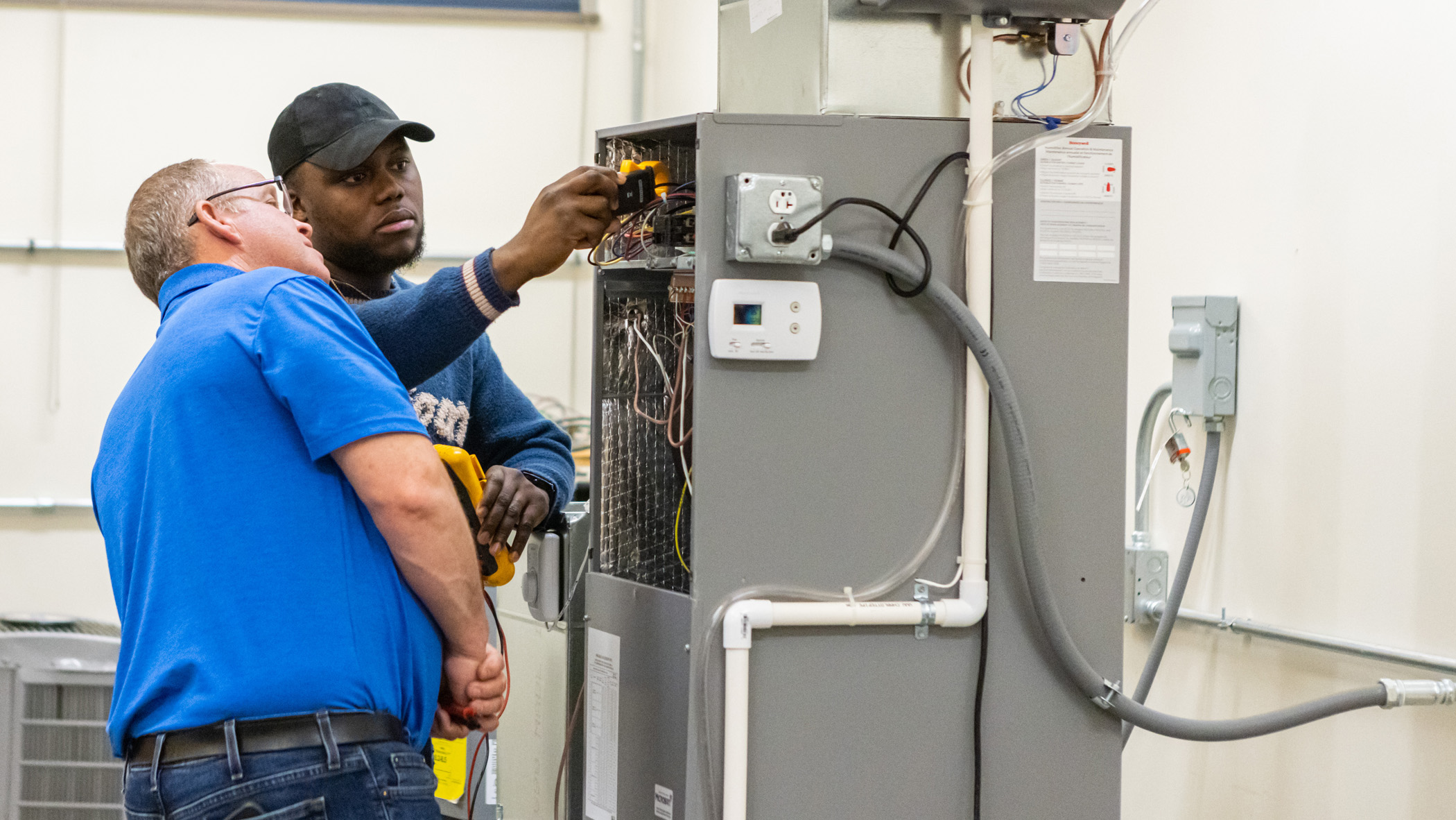
These programs are for students who enjoy hands‑on work, building things, and seeing the results of their effort. You’ll learn skills in construction, HVAC, building repair, and facility operations. These programs prepare you for high‑demand jobs in the skilled trades and can connect to industry certifications.

Leads to careers like: HVAC installer, building maintenance technician, construction laborer, facilities technician, building automation technician.

For students who want hands‑on work in construction, building systems, and facility operations our Industrial Technology Programs lead to pathways in Constructions, Maintenance/Operations, and Design/Pre-Construction.

Program Details

Architecture & Construction Certificates and Microcertificates

In-District Tuition
$169/credit hour
Out-of-District Tuition
$337/credit hour
Certificates
View Certificates
Microcertificates
View Microcertificates

Certificates

Construction Skills Certificate

The Construction Skills Certificate is a focused on preparing students for entry-level roles in the construction field—such as estimator, CAD technician, or project assistant. Coursework covers construction fundamentals, building materials and design, and essential safety training, including OSHA Construction or General Industry Safety certification. Importantly, these courses are fully transferable toward the Industrial Technology Certificate or the Associate of Applied Science (AAS) - Industrial Technology degree. 

Career Pathways

  • Estimator 
  • CAD Technician 
  • Architect’s Assistant 
  • Project Assistant 
  • Energy Auditor 
Local employers who desire these types of skills include: 
  • Home Sweet Home Ministries - students have done on-site work
  • Independent contractor - student has started a sole proprietorship
  • Mid Central Community Action, Inc. – student hired as apartment maintenance tech 

Heartland and Industry Credentials

  • Construction Skills Certificate
  • 10‑Hour or 30‑Hour OSHA Construction or General Industry Safety Card

Special Program Information

Transfer & Stackable Pathways: All courses in the Construction Skills Certificate can be applied toward the Industrial Technology. Certificate or the AAS degree, offering students upward mobility into broader technical fields.

Convenient Location & Fast-Track Option: Courses may be offered in partnership with community sites—such as Mid Central Community Action in Bloomington—allowing completion in just two semesters with accessible locations and possible financial aid support.

Hands-On Learning Environment: HCC emphasizes practical, experiential instruction in small classes and modern facilities—ideal for careers that are skill- and competency-based.

Average Class Size

  • 16 Students - receive more individualized attention

Course Information

  • Most classes are in-person during the day
  • Classes are 16 weeks
  • Math and Literacy placement are not required 

Completion Time 

  • 12 months  - 2 semesters for fall start
  • 18 months - 3 semester for spring start
  • 16 credit hours
  • See an advisor for a detailed plan that works for you 

Get Involved

  • Skills USA

Information is subject to change. Please check with an academic advisor for current course offerings and program requirements. Current students with continual enrollment may graduate under the current program requirements or any program requirements in effect since first enrollment.
Request Construction Skills Info

Building Maintenance Skills Certificate

The Building Maintenance Skills Certificate prepares students for entry-level positions in building and property maintenance. The curriculum provides broad-based training in carpentry, plumbing, electrical, appliance repair, and general building systems. Specific skills covered include patching drywall, painting interior walls and ceilings, laying vinyl, wood laminate, and ceramic tile flooring. Students will install doors and windows and learn repairing vinyl siding and asphalt roof shingles. Students also develop essential workplace skills like safety awareness, maintenance math, and problem-solving to handle various repair and upkeep needs. This program is designed for those who enjoy hands-on work, solving practical problems, and ensuring that residential and commercial buildings operate safely and efficiently. All courses in the certificate are fully transferable toward the Industrial Technology Certificate and the Associate of Applied Science (AAS) - Industrial Technology degree, offering a clear academic progression path. Skilled building maintenance workers are in demand in every community, from housing complexes and schools to hospitals and municipal facilities.

Career Pathways

  • Building Maintenance Technician
  • Custodian / Maintenance Worker
  • Apartment Maintenance Technician
  • Property Maintenance Technician
  • Building Repair Specialist
  • Facilities Maintenance Technician
  • Property Manager
  • Facilities Supervisor

Local employers hiring Heartland graduates include: 

  • Apartment complexes
  • Housing authorities
  • Schools and universities
  • Hospitals
  • Commercial property management firms
  • Municipal building departments
  • Independent contractors

Heartland and Industry Credentials

  • Building Maintenance Certificate 
  • 10‑Hour or 30‑Hour OSHA Construction or General Industry Safety Card
  • Students are prepared for:
    • Additional trade-specific credentials (basic electrical, plumbing, or appliance repair) depending on elective choices and employer requirements

Special Program Information

Students can customize the certificate by choosing a technical elective for the certificate. Most students choose to combine the Building Maintenance Certificate and the HVAC-R Installer Micro Certificate. 

Location: The Building Maintenance program is taught using classroom and lab spaces at multiple Heartland Community College locations and at MCCA (Mid Central Community Action) building, giving students hands-on experience with real-world building system repair and maintenance scenarios. 

Apprenticeship Opportunities: Students employed by regional property management companies or facility operations may have the opportunity to earn while they learn through employer partnerships or apprenticeship-style training.

Transfer Pathways: Credits from the Building Maintenance Skills Certificate can be applied toward Heartland’s Industrial Technology Certificate and/or AAS Industrial Technology degree, supporting academic progression. 

Average Class Size

  • 12 Students - receive more individualized attention

Course Information

  • Classes are in-person during the day
  • Classes are 16 weeks
  • Math and Literacy placement are not required 

Completion Time 

  • 12 months  - 2 semesters
  • 16 credit hours
  • See an advisor for a detailed plan that works for you 

Get Involved

  • Skills USA

Information is subject to change. Please check with an academic advisor for current course offerings and program requirements. Current students with continual enrollment may graduate under the current program requirements or any program requirements in effect since first enrollment.

Request Building Maintenance Info

Facilities Maintenance Skills Certificate

The Facilities Maintenance Skills Certificate is a program designed to prepare students for entry-level positions as facilities maintenance technicians. The curriculum covers foundational skills in heating and air conditioning, industrial electricity, and fluid power, enabling students to perform general maintenance and repair on buildings and mechanical systems. A key advantage for this certificate is that all courses in this certificate are fully transferable toward the Industrial Technology Certificate or the Associate of Applied Science (AAS) - Industrial Technology degree, offering a clear academic progression path. Nearly every industry relies on skilled maintenance technicians to keep operations safe, efficient, and cost-effective. From schools and hospitals to factories and apartment complexes, facilities technicians are in demand. This program is ideal for students who enjoy hands-on work, solving practical problems, and ensuring that building systems run smoothly.

Career Pathways

  • HVAC Technician 
  • Building Controls Technician 
  • Maintenance Technician 
  • Commercial Maintenance Technician 
  • Building Maintenance Technician 
  • Preventative Maintenance Technician 
  • Maintenance Worker 
  • Apartment Maintenance Technician

Local employers hiring Heartland graduates include:

  • Hospitals (OSF, Carle)
  • Universities and schools
  • Municipalities
  • Commercial property managers
  • Apartment complexes
  • Manufacturing plants (e.g., Rivian supplier network)
  • HVAC/electrical contractors. 

Heartland and Industry Credentials

  • Facilities Maintenance Certificate
  • 10‑Hour or 30‑Hour OSHA Construction or General Industry Safety Card
  • During many of the MAIN and MECH courses, students will have the opportunity to earn assorted Smart Automation Alliance Certification (SACA)
  • EPA 608 Refrigerant Handling Certification
  • Students are prepared to take the exam for: 
    • NC3 Certification 
    • NATE (North American Technician Excellence) Certification  
    • Illinois Department of Public Health requirements (used for specific facility maintenance roles in healthcare settings)

Special Program Information

Students can add one additional course and also receive the HVAC-R Installer Microcertificate.

Hybrid Format:

Some classes we offer in the Maintenance and Mechatronics areas are offered in a hybrid format that we call FLITE. Students are able to take some classes by doing the lectures online while completing the labs in-person at our state of the art FLITE Lab during preselected times that work for your schedule. 

Program can be completed if you work a full-time day job.

Program is located in our brand new Advanced Manufacturing Center with a state of the art HVAC and Industrial Maintenance labs.

Apprenticeship Opportunities

Students employed by regional industry may have the opportunity to earn while they learn through registered apprenticeships. Benefits typically include on-the-job training paired with classroom instruction, paid employment, tuition and material coverage, and guaranteed employment. 
 
Transfer Pathways 
Credits from the Facilities Maintenance certificate coursework can be applied toward Heartland’s Industrial Technology Certificate and/or AAS Industrial Technology degree, supporting academic progression. 

Average Class Size

  • 16 Students - receive more individualized attention

Course Information

  • Some classes are offered in-person during the day, in the evening, or with FLITE
  • Classes are 16 weeks
  • Math and Literacy placement are not required, but math placement could be helpful 

Completion Time 

  • 12 months  - 2 semesters
  • 18 credit hours
  • See an advisor for a detailed plan that works for you 

Get Involved

  • Skills USA

Suggested Sequence

Spring Year 1
Course
HVAC 102 - Air Conditioning & Refrigeration I
HVAC 103 - Heating Systems I

Technical Elective:

Request Facilities Maintenance Info

Energy Systems Technology Certificate

Energy Systems Certificate equips students with the knowledge and skills to design, install, operate, and maintain energy technologies such as energy producing systems of wind and photovoltaics.  It incorporates energy storage systems - batteries and energy control systems – building automation systems. The program combines classroom learning with hands-on training in energy systems, integration of energy systems, energy efficiency, and sustainable design and control. 

Students learn to work with industry-standard tools, safety practices, and emerging technologies that support a secure stable energy future. Graduates are prepared for technical careers as technicians, and specialists in fields that demand precision, problem-solving skills, and up-to-date technical knowledge.

Should you decide to pursue further education in this area, you can apply all of these courses toward the Industrial Technology Certificate or the Associate of Applied Science (AAS) - Industrial Technology degree

Career Pathways

Energy Storage Technician: Specializing in battery technologies, inverters, and energy management systems for solar-plus-storage and grid applications. 
 
Energy Project Coordinator: Overseeing planning, permitting, and implementation of solar, wind, or hybrid renewable projects. 
 
Sustainable Building Systems Technician: Working with energy-efficient HVAC, smart building controls, and renewable energy integration in green buildings. 
 
Wind Turbine Technician: Performing mechanical and electrical maintenance on wind turbines, including climbing towers and troubleshooting control systems. 
 
Solar Photovoltaic (PV) Technician: Installing, testing, and maintaining residential, commercial, and utility-scale solar power systems. 
 
Energy Auditor: Assessing homes and businesses to recommend renewable energy solutions and efficiency improvements. 
 
Electric Vehicle Charging Infrastructure Technician: Installing and servicing EV charging stations, often integrated with solar or energy storage systems. 
 
Renewable Energy Sales & Technical Consultant: Providing technical knowledge to help clients choose, design, and finance renewable energy solutions.

Local employers hiring Heartland graduates include:

  • Halo Solar 
  • Harvest  
  • Siemens 
  • Straight Up Solar 
  • Legacy Solar 
  • Invenergy 
  • EPD 
  • Ameren 
  • Constellation Energy 

Heartland and Industry Credentials

    •  Energy Systems Technology Certificate
    • 10‑Hour or 30‑Hour OSHA Construction or General Industry Safety Card
    • ETA-I PV-1 Installer certification 

Special Program Information

You must choose to focus on one of the following areas: Wind Energy, Solar Energy, Renewable Energy or Building Automation. 

Average Class Size

  • 16 Students - receive more individualized attention

Course Information

  • Day-time classes
  • Classes are 8 weeks and 16 weeks
  • Math and Literacy placement are not required, but math placement could be helpful 

Completion Time 

  • 12 months  - 2 semesters
  • 16 credit hours
  • See an advisor for a detailed plan that works for you 

Get Involved

  • Skills USA

Request Energy Systems Info

Energy Systems - Building Automation Option

Microcertificates

HVAC-R Installer Microcertificate

The Heating, Ventilation, Air Conditioning and Refrigeration (HVAC-R) Installer Microcertificate prepares you with the basic knowledge and skills necessary to work as an HVACR Installer in residential and industrial facilities. You will learn about the operation and maintenance of the individual components and functions of residential and industrial cooling equipment, as well as basic heating electrical systems, boilers, forced air furnaces, their operation, disassembly, inspection, and repair.

Career Pathways

  • HVAC-R Installer 
  • HVAC Technician 
  • Refrigeration Technician 
  • HVAC Mechanic 
  • Lead Installation Technician 
  • HVAC/Refrigeration Service Technician 

Local employers hiring Heartland graduates include:  

  • AirTec, Inc.  
  • Bratcher Heating & Air Conditioning 
  • Edelman Heating, Cooling, Plumbing Electric & Solar 
  • House's Services 
  • ProAir Heating, Cooling & Electrical 
  • Master Brothers 
  • Nextech 
  • Rose Heating & Air Conditioning 
  • Tiger Plumbing, Heating Air Conditioning, & Electrical Services 
  • Tradesmen International, Inc.  

Heartland and Industry Credentials

  • HVAC-R Installer Micro Certificate
  • 10‑Hour or 30‑Hour OSHA Construction or General Industry Safety Card
  • EPA 608 Refrigerant Handling Certification
  • Students are prepared to take the exam for:
    • NC3 Certification
    • NATE (North American Technician Excellence) Certification
    • Illinois Department of Public Health requirements

Special Program Information

This program is not covered by financial aid, however, students are eligible to apply for the work ready scholarship or you can explore other funding options here. 
 
This micro certificate is stackable with the Facilities Maintenance Certificate, Energy Systems Technology - Building Automation Certificate and Building Maintenance Certificate that are covered by financial aid. Should you decide to pursue further education in this area, you can apply all of these courses toward the Industrial Technology certificate and/or the Industrial Technology AAS degree. 
 
Program is located in our brand new Advanced Manufacturing Center with a state of the art HVAC lab. Additional HVAC courses are available that count towards the AAS degree.  
 
We intentionally collaborate with employers locally that help advise on content for our program and who come into our classroom to provide expertise as well to hire our students for full-time roles.  

Average Class Size

  • 16 Students - receive more individualized attention

Course Information

  • Day-time and evening classes
  • Classes are 16 weeks
  • Math and Literacy placement are not required 

Completion Time 

  • 4 months  - 1 semester
  • 8 credit hours
  • See an advisor for a detailed plan that works for you 

Get Involved

  • Skills USA

Request HVAC-R Installer Info

Special Program Information

All certificates can be applied toward Heartland’s Industrial Technology Certificate and/or Associate in Applied Science - Industrial Technology degree.

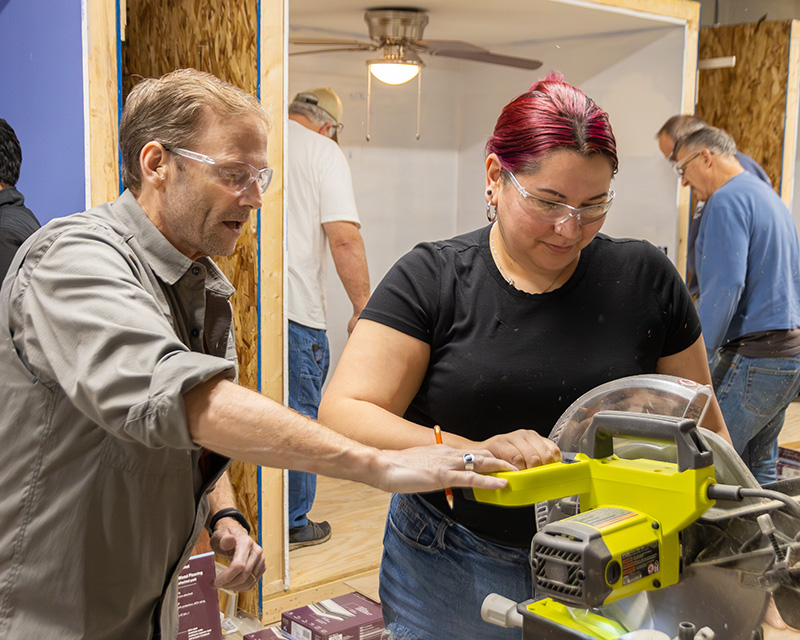
Our programs are taught fully in person and built around hands‑on learning. Students work directly with industry‑standard equipment, real tools, and real projects — the kind of experience employers look for. 

Career Pathways

  • 19

    Average Class Size

  • 70+

    Programs of Study

Contact Information

Career & Technical Education Division

SCB 2400
1500 W Raab Road
Normal, IL 61761
Phone: 309-268-8860
Fax: 309-268-7963
Email: jess.washington@heartland.edu


Career & Technical Education Contacts

Jess Washington 

Program Assistant – Career & Technical Education Division
Email: Jess.Washington@heartland.edu
Phone: (309) 268-8871

Career & Technical Education Leadership

Adam Campbell

Dean, Career & Technical Education
SCB 2410

Kortney Watts

Associate Dean, Career & Technical Education
SCB 2409