Art

Why Art?

Art expresses beauty and emotional power by using human creative imagination. By studying art, you tap your imagination and bring your vision to life. You learn to think critically and solve problems. These skills benefit any career you choose. Learning the fundamentals of design helps you assess your work and grow creatively by focusing on concept, technique, and invention.

Art majors find employment in a wide variety of jobs including art director, fine artist, graphic designer, web designer, animator, game designer, gallery director, photographer, and many more.

Program Details

Associate in Arts

Format
On Campus, Online, Hybrid
In-District Tuition
$169/credit hour
Out-of-District Tuition
$337/credit hour
Suggested Sequence
View Suggested Sequence
Degree
View Degree
Average Time to Complete
2 years
Financial Options
Financial Aid is available.

Program Highlights

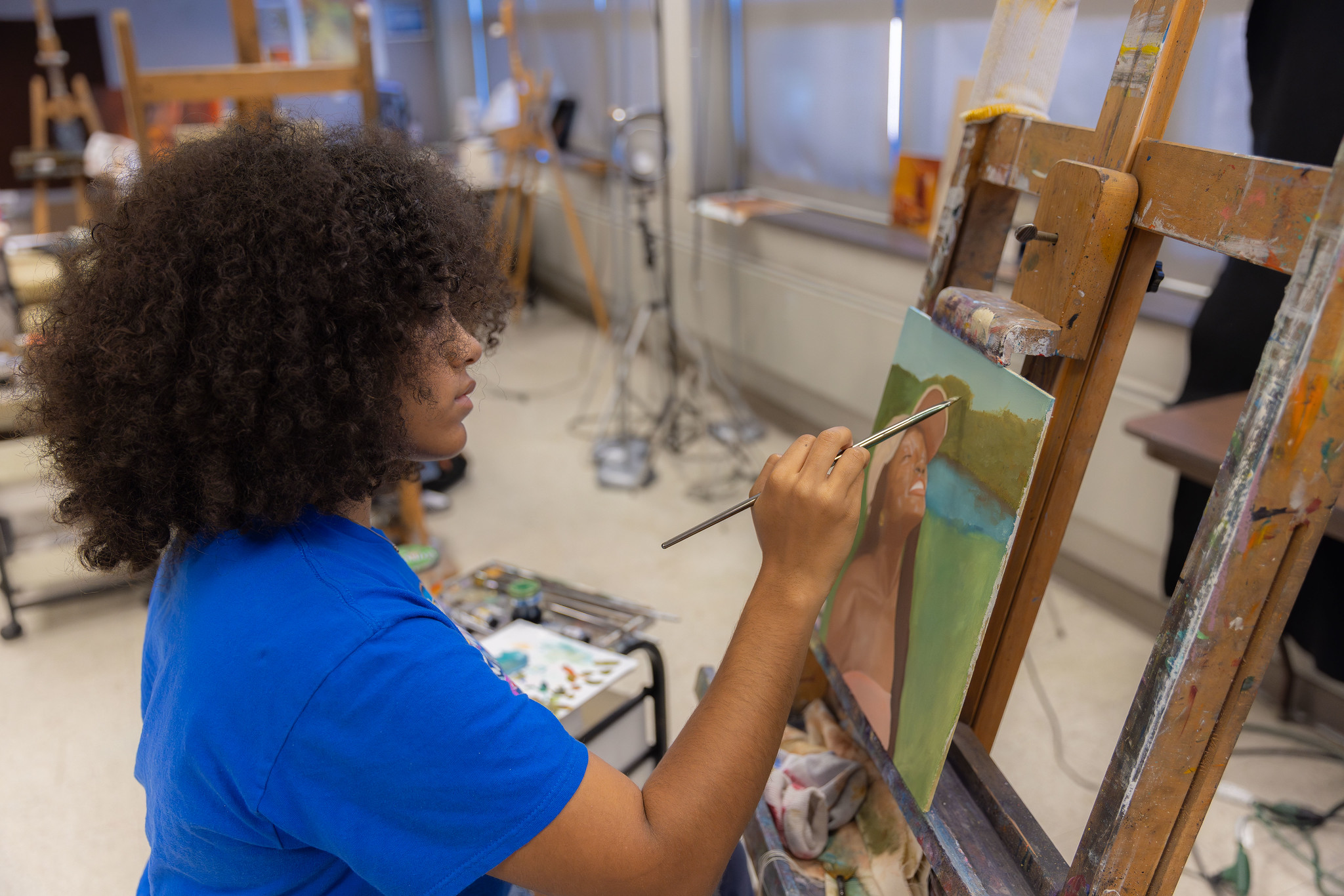
Art courses teach you problem solving and critical thinking skills. This can be a benefit to any career you choose and greatly enrich your life. At HCC, courses are led by professional artists in a studio atmosphere. They'll teach you the theories and fundamentals of design and help you critically assess your work. You will grow creatively by focusing on concept, technique, and invention.

There are many reasons to study art at Heartland Community College:

  • Heartland's McCauley Gallery showcases student and professional artwork throughout the year.
  • Art history and appreciation classes fulfill general education core requirements
  • Studio classes taught by professional artists in a studio atmosphere
  • New and current students of art can apply for the Joe McCauley Art Scholarship
  • Art students are encouraged to exhibit their work both on-campus and in outside exhibitions
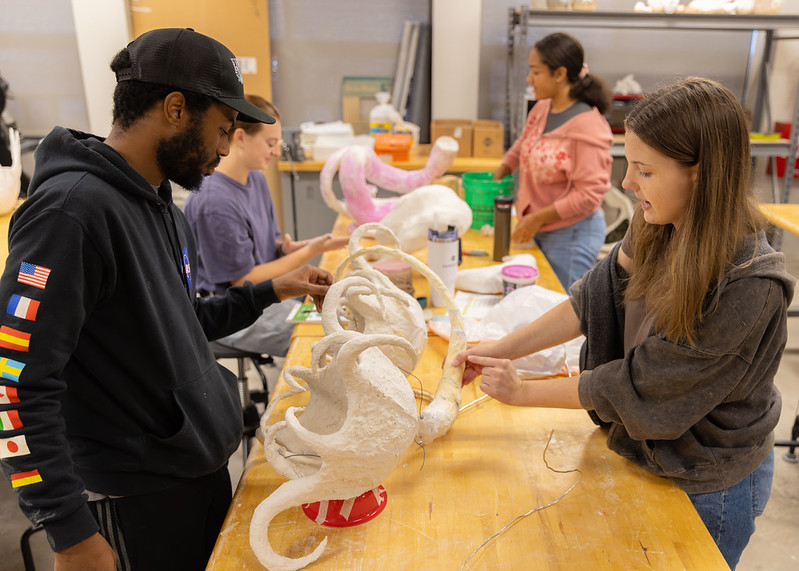
  • Art facilities include painting and drawing studios, darkroom and digital photo labs, Mac computer lab, sculpture lab including a woodshop and foundry, ceramics lab with both electric and gas fired kilns
  • Heartland art courses transfer directly to ISU and art majors can transfer as juniors
Courses

  • ART 102: Two-Dimensional Design
    • Major Code: ART 907
  • ART 103: 3D Design: Introduction to Sculpture
    • Major Code: ART 908
  • ART 104: Drawing I
    • Major Code: ART 904
  • ART 105: Pottery I
  • ART 106: Painting I
  • ART 120: CreatiVets Introduction to Veteran Art
  • ART 150: Understanding Art
    • IAI Course Code: F3 900
  • ART 154: Drawing II
    • Major Code: ART 905
  • ART 160: Illustration
  • ART 180: Introduction to Darkroom & Digital Photography
  • ART 195: History of Photography
    • IAI Course Code: F2 904
  • ART 204: Life Drawing
  • ART 205: Pottery II
  • ART 206: Painting II
  • ART 211: Art History I: Prehistoric to Late Gothic
    • IAI Course Code: F2 901
  • ART 212: Art History II: Renaissance to Modern
    • IAI Course Code: F2 902
  • ART 220: Arts for Early Childhood: Visual Arts
  • ART 231: Graphic Design I
  • ART 241: Graphic Design II
  • ART 280: Advanced Darkroom & Digital Photography
  • ART 296: Special Topics in Art

IAI courses have been approved for transfer to an Illinois public university.

Suggested Sequence

Semester 1 - Fall
Course Hours
ART 102  OR  ART 103 - 2D Design OR 3D Design, Sculpture

3 

ART 104 - Drawing I

3

ART 211 - Art History I

3

Elective(s) - One or more courses totalling 2 or more credit hours

2

Semester 2 - Spring
Course Hours
ART 102  OR  ART 103 - 2D Design OR 3D Design, Sculpture

3 

ART 154  OR  ART 204 - Drawing II OR Life Drawing

3

ART 212 - Art History II

3

ENGL 101, ENGL 102  OR  COMM 101 - Any 1 Communication course: Critical Reading & Writing, Multimodal Composition OR Introduction to Oral Communication

3 (C or higher)

Social & Behavioral Science  - Any 1 IAI Social & Behavioral Science course (You will need 3 courses from 2 disciplines)

3

Semester 3 - Fall
Course Hours
ART 105, 106, 145, 160, 180 OR 231- Any two studio electives: Ceramics I, Painting I, Sculpture I, Illustration, Photo I: Darkroom Photography OR Graphic Design I

6

ENGL 101, ENGL 102 OR COMM 101 - Any 1 Communication course: Critical Reading & Writing, Multimodal Composition OR Introduction to Oral Communication

3

Social & Behavioral Science  - Any 1 IAI Social & Behavioral Science course (You will need 3 courses from 2 disciplines)

3

Life Science OR Physical Science - Any one IAI Life Science OR IAI Physical Science course with a lab component

4

Semester 4 - Spring
Course Hours
ART 105, ART 106, ART 145, ART 154, ART 160, ART 180, ART 205, ART 206, ART 231, ART 241 OR ART 280 - Any two studio electives: Ceramics I, Painting I, Sculpture I, Drawing II, Illustration, Photo I: Darkroom Photography, Ceramics II, Painting II, Graphic Design I, Graphic Design II OR Photo II: Advanced Darkroom Photography

6

ENGL 101, ENGL 102 OR COMM 101 - Any 1 Communication course: Critical Reading & Writing, Multimodal Composition OR Introduction to Oral Communication

3

Social & Behavioral Science  - Any 1 IAI Social & Behavioral Science course (You will need 3 courses from 2 disciplines)

3

Life Science OR Physical Science - Any one IAI Life Science OR IAI Physical Science course with a lab component

4

This curriculum guide is not intended to be a contract, but rather to provide important information to students. Changes/revisions may occur from time to time to ensure curricula reflect technological advances in the field.

Information is subject to change. Please check with an academic advisor for current course offerings and program requirements. Current students with continual enrollment may graduate under the current program requirements or any program requirements in effect since first enrollment.

Degree - Associate in Arts

Within our Associate in Arts degree, there may be specific courses that are recommended for your major at your chosen transfer school. It’s important to meet with an academic advisor each semester to ensure that the correct coursework is taken, while earning your degree.

Even if your specific concentration or major is not listed on our application or program pages, academic advisors can help ensure you are taking the right coursework for your chosen major.

Learn more about the general education requirements for an Associate in Arts. 

Transfer Guide

Illinois Articulation Initiative (IAI) 

Heartland Community College is a participant in the Illinois Articulation Initiative (IAI), a statewide transfer agreement among more than 100 colleges and universities in Illinois. IAI courses have been approved for transfer to an Illinois public university. For more information about the Illinois Articulation Initiative, please visit the IAI website. 

General Education Core Curriculum Requirement

For completion of the Associate in Arts degree, you will need to complete a minimum of 37 general education core curriculum (GECC) hours, within 7 categories, as part of the 60-credit hour degree. Please click on the category to view what courses Heartland has to offer within each of the required categories.

View what courses Heartland has to offer within each of the required categories:
Communications 
Fine Arts 
Humanities 
Life Sciences 
Mathematics 
Physical Sciences 
Social & Behavioral Sciences

Careers

An exciting variety of career opportunities exist for those with a background in the arts, including:

  • Art Director
  • Fine Artist
  • Craft Artist
  • Graphic Designer
  • Web Designer
  • Industrial Designer
  • Interior Designer
  • Multimedia Artist
  • Animator
  • Game Designer
  • Special Effects Artist
  • Gallery Director
  • Museum Curator
  • Architect
  • Landscape Architect
  • Photojournalist
  • Photographer

Bureau of Labor Statistics

  • Art grads report high levels of employment and career satisfaction.*
  • "Artists are highly entrepreneurial. More than 6 in 10 were self-employed and 14 percent founded their own company."*
  • 80% of recent art graduates find a first job that's either "closely" or "somewhat" related to their education. (SNAAP)
  • 65% of recent art alumni and 68% of distant art alumni continue to work in arts-related fields. (SNAAP)
  • Even among those who don't work in the arts, over half still say their arts training is relevant to their job. (SNAAP)
  • Arts graduates' starting salaries average around $38,400 according to the National Association of Colleges and Employers.
  • Arts graduates tend to be highly satisfied with their careers and engagement levels.
  • Creativity is considered a top skill for future success by global business leaders.

Resources

The U.S. Department of Education's gainful employment regulations require disclosure of certain program information to students and prospective students.

Please review the employment information pertaining to your degree or certificate by selecting your intended program at the Heartland Community College Career Coach.

For more information about graduation rates, loan repayment rates, and post-enrollment earnings about this institution and other postsecondary institutions visit the U.S Department of Education College Scorecard site.

Contact Information

Liberal Arts & Social Sciences Division Office

ICB 2000 & 2100
1500 W Raab Road
Normal, IL 61761
Phone: 309-268-8620
Fax: 309-268-7991
Email: LASS Office

Liberal Arts & Social Sciences Contacts

Emma Grant

Coordinator
Phone: 309-268-8635
Email: Emma.Grant@heartland.edu

Jazmin Berumen

Program Assistant
Phone: 309-268-8620
Email: Jazmin.Berumen@heartland.edu

Liberal Arts & Social Sciences Leadership

Karla Huffman

Dean of Liberal Arts and Social Sciences
Email: Karla.Huffman@heartland.edu

Carol Hahn

Associate Dean of Liberal Arts and Social Sciences
Email: Carol.Hahn@heartland.edu