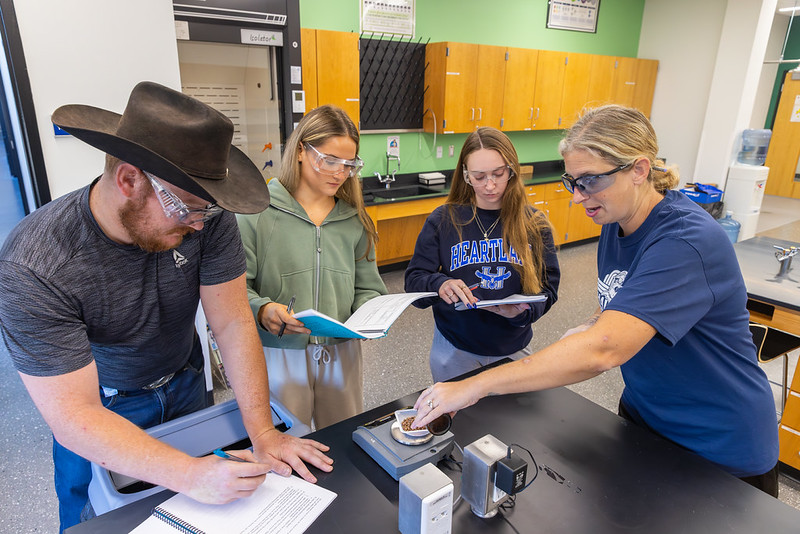
Students collaborating in a biology lab

Chemistry

Why Chemistry?

Chemistry is a foundational science that examines matter at the molecular level and plays a critical role in many fields, including health care, food science, energy, water quality, environmental studies, criminal justice, and pre-professional pathways. 

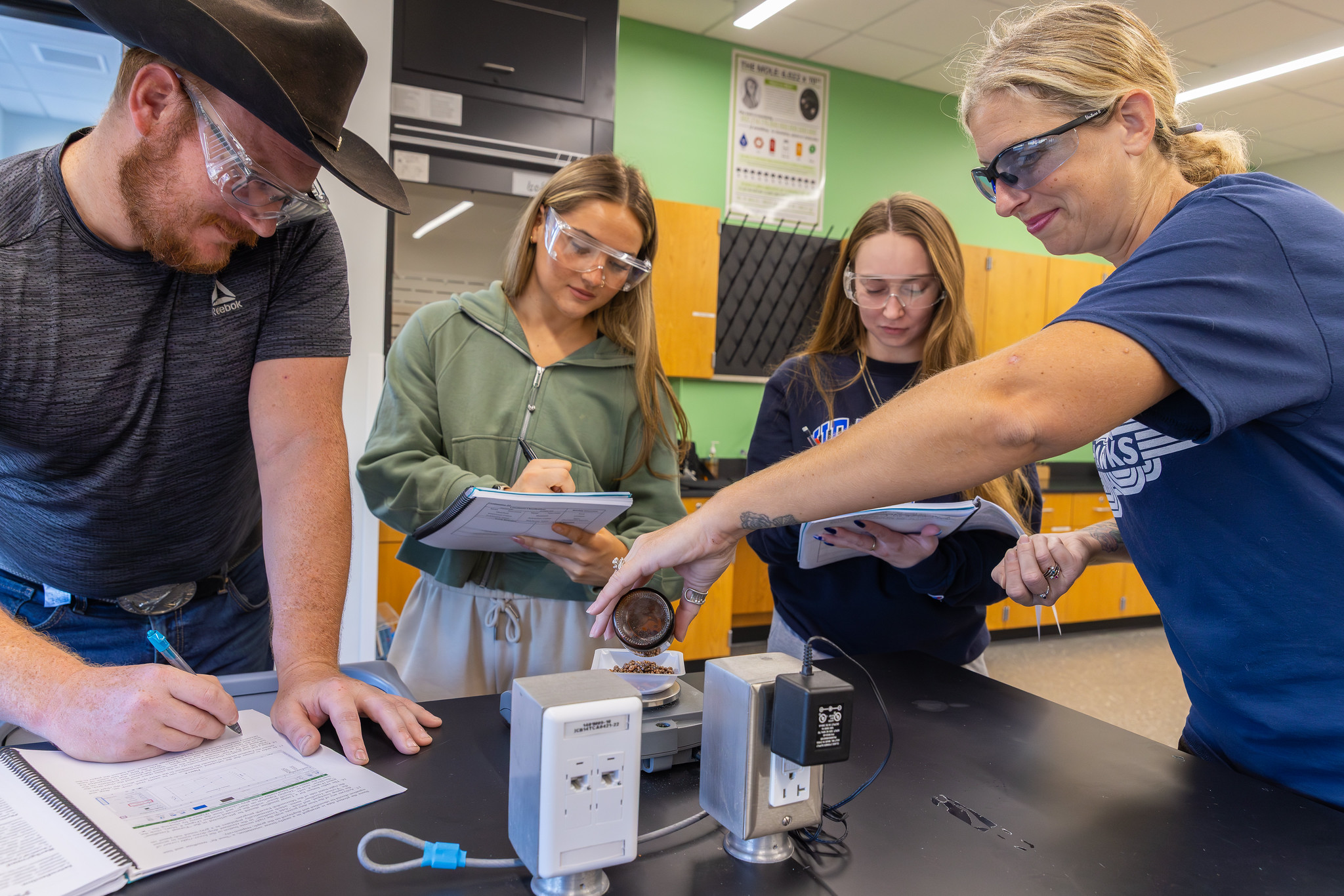
Exciting things are happening in chemistry at Heartland. Introductory chemistry courses are designed to transfer seamlessly to four-year colleges and universities, while hands-on instruction takes place in modern, well-equipped laboratories. Students can choose from a wide range of courses, including forensic chemistry with crime scene applications, organic chemistry, and chemistry courses designed for allied health students. In addition, dual credit agreements with local high schools allow students to begin their chemistry studies early and get a head start on college coursework.

As a chemistry student, you will build a strong foundation in chemical principles, laboratory techniques, and analytical thinking that prepares you for a wide range of career and transfer opportunities. Many students use chemistry as a pathway into allied health and science-related programs.  
Program Details

Associate in Science

Format
On Campus, Online, Hybrid
In-District Tuition
$169/credit hour
Out-of-District Tuition
$337/credit hour
Degree
View Degree
Average Time to Complete
2 years
Financial Options
Financial Aid is available.

Program Highlights

By transferring to a four-year college or university, you can continue your studies and prepare for careers in fields such as: 

  • Medicine
  • Chemical Engineering 
  • Biochemistry 
  • Pharmaceutical Science 
  • Materials Science 
  • Education 

A chemistry degree also provides excellent preparation for students planning to apply to professional programs such as medical school, pharmacy school, or other health-related graduate programs. 

Courses

  • CHEM 099 Preparatory College Chemistry
  • CHEM 110 Chemistry of CSI: Forensic Chemistry
  • CHEM 115 Food Chemistry
  • CHEM 120 Fundamentals of Chemistry
  • CHEM 161 General Chemistry I
  • CHEM 162 General Chemistry II
  • CHEM 231 Elementary Organic Chemistry
  • CHEM 241 Organic Chemistry I
  • CHEM 242 Organic Chemistry II
  • CHEM 271 Introduction to Biochemistry
  • CHEM 297 Independent Study in Chemistry

Degree - Associate in Science

Within our Associate in Science degree, there may be specific courses that are recommended for your major at your chosen transfer school. It’s important to meet with an academic advisor each semester to ensure that the correct coursework is taken, while earning your degree.

Even if your specific concentration or major is not listed on our application or program pages, academic advisors can help ensure you are taking the right coursework for your chosen major.

Learn more about the general education requirements for an Associate in Science. 

Transfer Guide

Illinois Articulation Initiative (IAI) 

Heartland Community College is a participant in the Illinois Articulation Initiative (IAI), a statewide transfer agreement among more than 100 colleges and universities in Illinois. IAI courses have been approved for transfer to an Illinois public university. For more information about the Illinois Articulation Initiative, please visit the IAI website. 

General Education Core Curriculum Requirement

For the completion of the Associate in Science degree, you will need to complete a minimum of 41 general education core hours as part of the 60-credit hour degree. The remaining credit hours are electives. Please click on the category to view what courses Heartland has to offer within each of the required categories.

View what courses Heartland has to offer within each of the required categories:
Communications 
Fine Arts 
Humanities 
Life Sciences 
Mathematics 
Physical Sciences 
Social & Behavioral Sciences

  • $0

    Application Fee

  • 70+

    Programs of Study

  • 19

    Average Class Size

Careers in Chemistry

By continuing your chemistry studies at a four-year institution, you can prepare for employment in a diverse array of fields. Some career options related to chemistry include:

  • Medicine
  • Pharmaceuticals
  • Materials Science and Engineering
  • Hazardous Waste Management
  • Chemical Engineering
  • Government Policy and Law
  • Agriculture
  • Education

Nearly 37 million jobs in America (127,000 in the state of Illinois) are connected in some way to chemicals or their production.*


Those working in the chemical industry in Illinois earn 55% more than the average national manufacturing wage.*

*Occupational Outlook data from www.americanchemistry.com.

The U.S. Department of Education's gainful employment regulations require disclosure of certain program information to students and prospective students.

Please review the employment information pertaining to your degree or certificate by selecting your intended program at the Heartland Community College Career Coach.

For more information about graduation rates, loan repayment rates, and post-enrollment earnings about this institution and other postsecondary institutions visit the U.S Department of Education College Scorecard site.

Contact Information

Science Department

ICB 2400
1500 W Raab Road
Normal, IL 61761
Phone: 
Fax:

Christy Fornero 

Associate Director, Science Laboratories 
Email: Christy.Fornero@heartland.edu

Phone: (309) 268-8519

STEM & Business Contacts


Jennifer Antonini 

Coordinator – STEM & Business
Email: Jennifer.Antonini@heartland.edu
Phone: (309) 268-8651

STEM & Business Leadership

Jeremy McClure

Dean – STEM & Business
Email: Jeremy.McClure@heartland.edu 
Phone: (309) 268-8655

Brian Brennan

Associate Dean, STEM & Business
Email: Brian.Brennan@heartland.edu
Phone: (309) 268-8639